

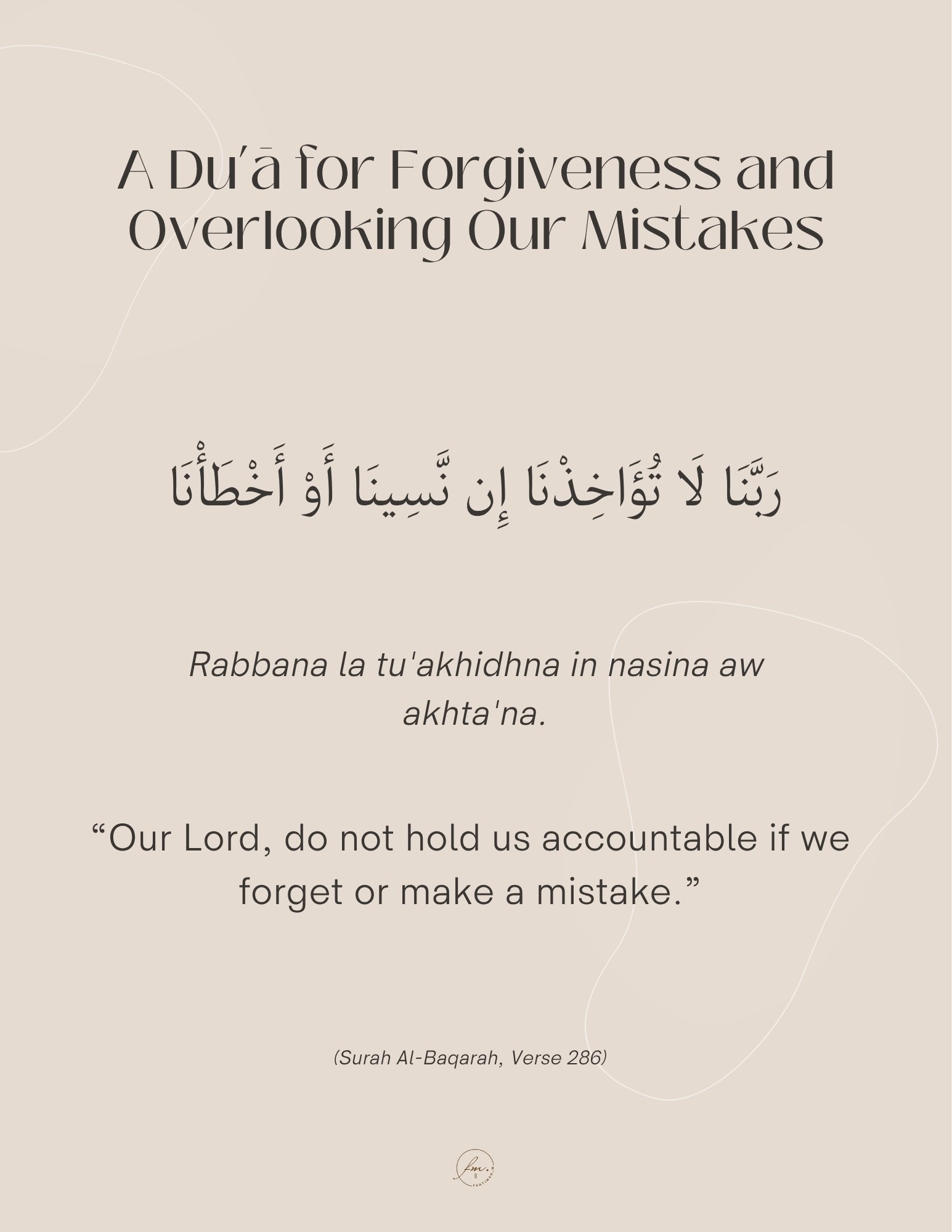
There is something so beautiful about this du’ā. It is short, but it carries a reminder that we all need throughout our lives.
We are human. We forget, we make mistakes, we fall short and sometimes we find ourselves repeating the very things we promised ourselves we would never do again.
There are moments when we know better but still get things wrong. Moments when our emotions get the better of us, when we react instead of responding, when we neglect something important or when we fall into habits we are trying so hard to overcome.
And sometimes, we do things without even realising that we have done something wrong.
This du’ā teaches us to acknowledge our human limitations and turn to Allah, asking Him not to hold us accountable for our forgetfulness and mistakes.
A beautiful reminder about our relationship with Allah
Notice how this du’ā begins.
Rabbana… Our Lord.
We are calling upon our Rabb, the One who created us, knows us completely and knows just how imperfect we are.
We are not approaching Him pretending to have everything together. We are acknowledging that we need His mercy, His forgiveness and His understanding.
There is a difference between making excuses for our mistakes and recognising that we are human.
Islam does not teach us to become comfortable with our shortcomings or to stop striving towards becoming better. Rather, it teaches us to take responsibility, acknowledge where we fall short, seek forgiveness and keep making an effort.
But it also teaches us not to despair.
Perhaps you are someone who is particularly hard on yourself. You replay conversations in your mind, remember things you wish you had done differently and constantly remind yourself of your mistakes.
Perhaps there are things you did years ago that you still struggle to forgive yourself for.
Or perhaps you are currently working through habits and behaviours that you have been trying to overcome for a long time.
Let this du’ā be a reminder to keep turning to Allah.
Do not let your mistakes become a reason to distance yourself from Him. Let them become a reason to seek Him even more.
Istighfār is not only about seeking forgiveness for the obvious sins we are aware of.
It is also about recognising our shortcomings, acknowledging our weaknesses and asking Allah to overlook the things we may not even realise we have done.
We can ask Allah to forgive the words we spoke carelessly, the moments we lacked patience, the times we were ungrateful, the opportunities we missed to do good and the ways in which we fell short in our responsibilities towards Him and His creation.
We can ask Him to forgive what we remember and what we have forgotten, what we recognise and what we have yet to recognise.
And as we make Istighfār, let us also make a conscious effort to improve ourselves.
If we have hurt someone, let us try to make things right. If we recognise a behaviour that needs changing, let us work on it. If we keep falling into the same mistakes, let us keep seeking Allah’s help while taking practical steps towards change.
We are not aiming for perfection. We are striving for sincerity, awareness and consistency.
A little reflection
Take a moment to think about the things you may have been overlooking in yourself.
Are there certain behaviours you have become accustomed to? Are there things you keep putting off changing? Are there moments when you could have shown more patience, kindness or gratitude?
Ask Allah to help you recognise your shortcomings without becoming consumed by guilt.
Ask Him to forgive you for what you know and what you do not know.
And ask Him to help you become more mindful of your words, actions, intentions and the way you treat others.
This du'ā is part of the final verses of Surah Al-Baqarah. In an authentic hadith, the Prophet ﷺ informed us that when a servant recites the closing verses of Surah Al-Baqarah and makes these supplications, Allah responds, "I have done so." (Sahih Muslim 126).
May Allah forgive us for our shortcomings, overlook our mistakes, guide us towards what pleases Him and help us become better with each passing day.
Ameen.