

The Du’ā That Teaches Us Balance
One of the most beloved and powerful du’ās in the Qur’an is:
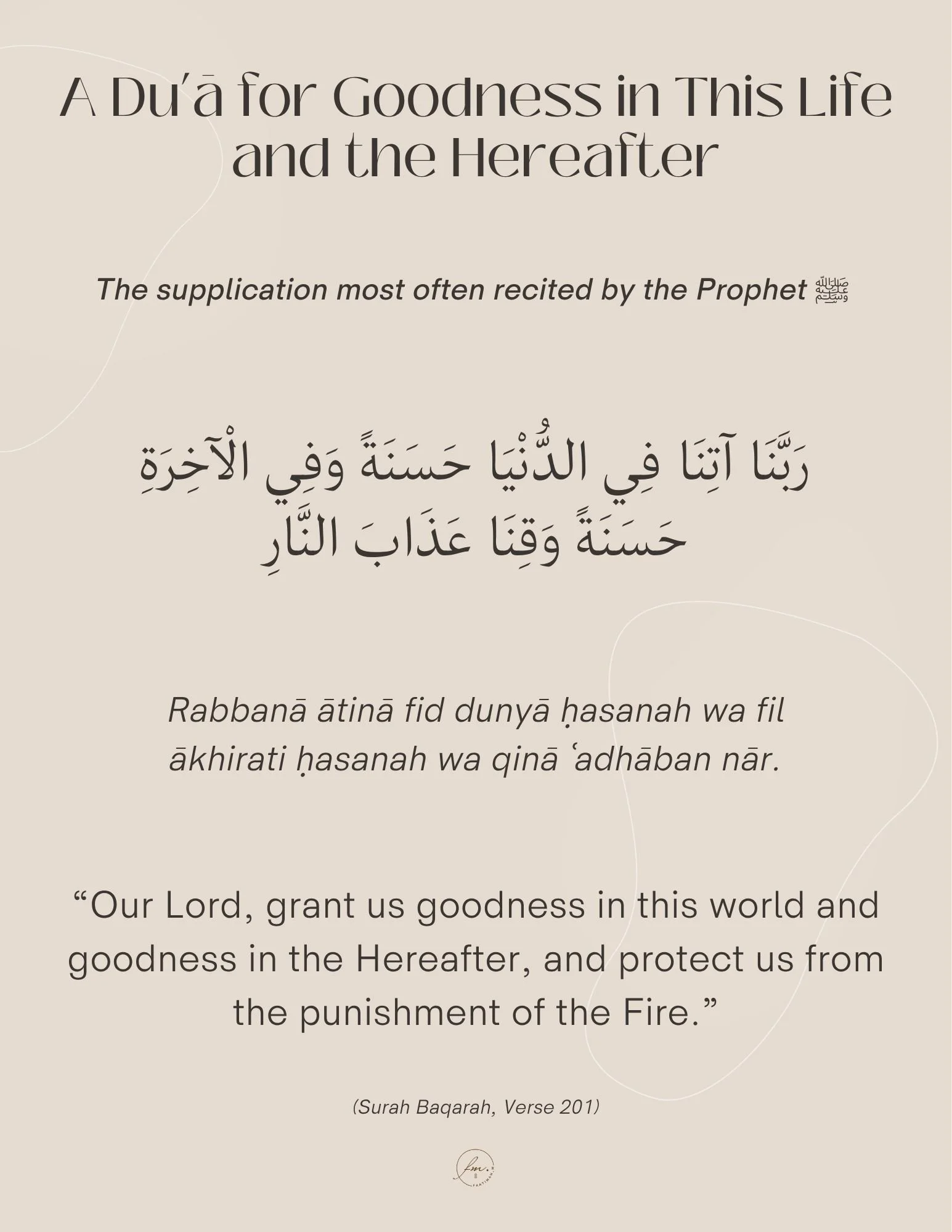
رَبَّنَا آتِنَا فِي الدُّنْيَا حَسَنَةً وَفِي الْآخِرَةِ حَسَنَةً وَقِنَا عَذَابَ النَّارِ
Rabbanā ātinā fid dunyā ḥasanah wa fil ākhirati ḥasanah wa qinā ʿadhāban nār.
“Our Lord, grant us goodness in this world and goodness in the Hereafter, and protect us from the punishment of the Fire.”
There is something deeply beautiful about this du’ā because it teaches us balance.
Sometimes we think being close to Allah means we should completely detach from dunya, ignore our emotional needs, suppress our pain, or feel guilty for wanting ease, happiness, love or fulfilment.
But this du’ā shows us that Allah allows us to ask for goodness in both worlds.
Not only the Hereafter.
But this life too.
And perhaps this is why this du’ā resonates so deeply with so many women.
Because many women are silently trying to survive emotionally while also trying to stay spiritually connected.
Some are asking Allah for healing after heartbreak.
Some are asking Allah for peace in their homes.
Some are longing for righteous spouses.
Some are carrying anxiety about the future.
Some are struggling financially.
Some are trying to become better mothers.
Some are trying to rediscover themselves after years of pouring into everyone else.
Some simply want to feel emotionally safe again.
And Allah does not shame us for these desires.
This du’ā reminds us that it is okay to ask Allah for a beautiful life while still longing for Jannah.
“Goodness in this world” can mean so many things.
A heart that finally feels at peace.
Halal love that feels safe.
Healing from trauma.
Barakah in your home.
Softness in your heart.
Rizq that brings ease.
Good company.
Contentment.
Closeness to Allah.
A life filled with meaning.
And “goodness in the Hereafter” is even greater.
To stand before Allah with a heart that tried.
To be forgiven despite our flaws.
To be reunited with those we love.
To enter Jannah through His mercy.
This du’ā is not just about asking Allah for things.
It is about recognising that every form of goodness comes from Him.
And perhaps one of the most emotional parts of this du’ā is that it teaches us that we are allowed to want both.
To want closeness to Allah and emotional healing.
To desire Jannah and also pray for a life filled with peace and barakah.
To seek spirituality without neglecting our human hearts.
Especially during the days of Dhul Hijjah, this du’ā becomes even more meaningful.
These are days where hearts soften.
Where people return to Allah.
Where du’ās are accepted.
Where we reflect on the legacy of Ibrahim عليه السلام, sacrifice, trust and complete surrender to Allah.
So ask Allah for goodness in every part of your life.
Goodness in your heart.
Goodness in your healing.
Goodness in your relationships.
Goodness in your future.
Goodness in your akhirah.
Because Allah is not limited in what He can give.
And no matter how broken, lost or exhausted you feel, His door remains open, His mercy remains vast, and His ability to transform your life remains greater than anything you can imagine.